What does a Pure Sine Wave inverter do?
I’m an Electrical Engineer with more than 15 years of experience. This includes 6 years in solar installation. I currently work at MPNG, a $100M tech start-up. I’ve deployed solar systems nationwide, so I started this blog. Here, I share clear, honest, engineer-grade advice that cuts through the marketing noise.
We must first define what an inverter is. An inverter is a device that changes direct current (DC) into alternating current (AC). They are critical components in solar power systems and uninterruptible power supplies (UPS).
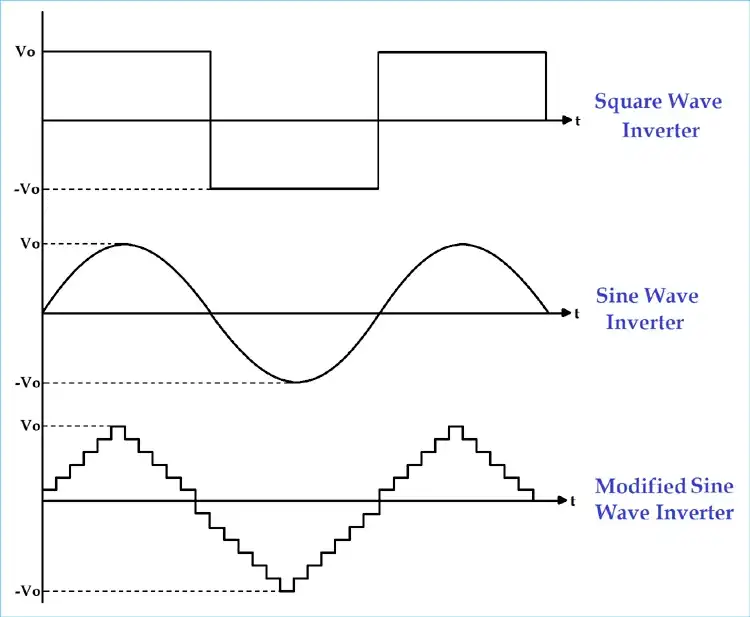
A good inverter should not only generate AC, but it should generate AC of good waveform and quality. However, due to cost and simplicity considerations, lower-tier inverters exist. There are three types of inverters based on the quality of their output.
Pure-Sine Wave Inverters
These inverters produce an output that matches or even exceeds the mains AC supply from the grid.
They should definitely be the default choice for inverters. However, their high cost puts people off.
Pros:
- Cleanest power: They work well with all devices, including sensitive electronics. This includes medical equipment, variable-speed drives, and modern appliances.
- Higher efficiency for electronics (less heat, better performance, longer lifespan)
- Minimal noise or interference
- Handles surges better in many cases.
Cons:
- much more expensive
- slightly higher idle or no-load consumption in some models
Modified Sine-Wave Inverters
They create a rough approximation of a sine wave using flat steps or plateaus, like a staircase. They are a lower tier compared to pure sine wave inverters but are half the cost.
Pros:
- Cost-effective and widely available
- Good enough for many resistive loads and some inductive loads (e.g. basic lights, fans, older-applainces and simple power tools).
Cons:
- May damage or shorten the lifespan of sensitive electronics. Such as laptops, medical devices, variable-speed motors, laser printers, etc
- They can be noisy
Square Wave Inverters
These create a simple square waveform that changes rapidly between positive and negative voltage.
Pros:
- Cheapest and simplest design.
- Suitable for mainly resistive loads, like incandescent bulbs, heaters, and some power tools with universal motors.
Cons:
- Often damages or fails sensitive electronics: laptops, medical devices, variable-speed motors, laser printers etc.
- Very noisy operation; can interfere with electronics, audio and sensitive devices.
- High harmonic distortion; it introduces many odd harmonics that can cause buzzing, over-heating, inefficiency and potential damage
When to Choose Which?
- Pure sine wave: If you have computers, TVs, medical devices, variable-speed tools, or want "set it and forget it" reliability. Strongly recommended for solar/off-grid systems or frequent use.
- Modified sine wave: Fine for camping, basic backup, or running simple resistive loads where budget matters most. Test your specific devices first.
- Square wave: Avoid unless it's a very cheap temporary solution for tolerant loads only.
Additional Tips;
- Motors (especially inductive ones like in fridges or pumps) and electronics generally prefer pure sine.
- Pure sine inverters are more future-proof as devices get more sensitive.
- Efficiency losses on modified/square can mean you need a larger battery bank for the same runtime.